
Technical Articles
NANBEI Is Professional On Providing One-step Solution Of Laboratory Instruments And Equipment
Laboratory centrifuges are essential instruments used in biological research, medical diagnostics, pharmaceutical development, and chemical analysis. By generating high-speed centrifugal force, these devices separate components of different densities within liquid samples. Selecting the right centrifuge directly affects laboratory efficiency, accuracy, and safety.With the rapid development of modern laboratories, the demand for reliable centrifuge equipment continues to increase. As a professional laboratory equipment supplier, nanbei instrument provides a wide range of centrifuge models and integrated laboratory solutions for universities, research institutions, and industrial laboratories worldwide.
Below are seven critical factors that buyers should carefully evaluate when purchasing a laboratory centrifuge.
The first specification to evaluate is the centrifuge’s maximum rotational speed and relative centrifugal force. Different experimental applications require different separation strengths.
Low-speed centrifuges are suitable for routine clinical testing and cell culture separation, while high-speed centrifuges are necessary for molecular biology and protein purification. Buyers should ensure that the selected model can generate sufficient centrifugal force for their intended applications.
Nanbei instrument offers a complete range of centrifuges from low-speed clinical units to high-speed laboratory systems designed for demanding research environments.
Internal link:
https://www.nanbei-instrument.com/laboratory-centrifuge
Rotor compatibility significantly affects the flexibility of a centrifuge. Common rotor types include:
Fixed-angle rotors
Swing-out rotors
Microtube rotors
Plate rotors
Laboratories handling different sample volumes may require multiple rotor options. Capacity considerations are also important, especially for facilities processing large batches of samples.
Nanbei instrument provides multiple rotor configurations to support microcentrifuge tubes, PCR plates, blood tubes, and larger laboratory containers.
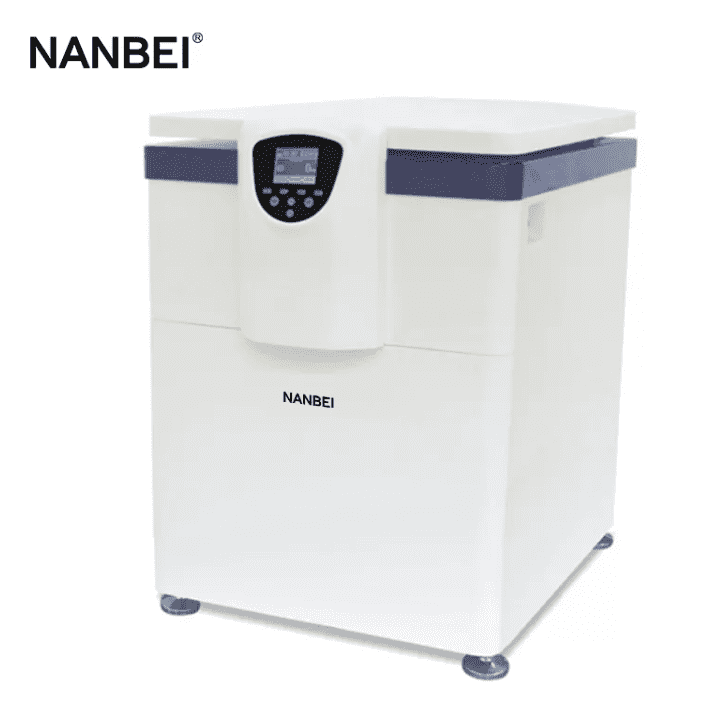
Safety is one of the most critical considerations in centrifuge selection. High rotational speeds create significant mechanical stress and potential risks.
Essential safety features include:
Lid locking systems
Imbalance detection
Over-speed protection
Automatic shutdown functions
Nanbei instrument integrates advanced safety protection mechanisms to ensure safe operation even during high-speed runs.
Many biological samples are sensitive to temperature fluctuations. In molecular biology, enzymatic reactions and protein samples may degrade if exposed to excessive heat during centrifugation.
For such applications, refrigerated centrifuges are recommended. These models maintain stable internal temperatures, protecting sample integrity throughout the process.
Nanbei instrument supplies refrigerated centrifuges suitable for biotechnology laboratories, pharmaceutical research centers, and clinical testing facilities.
Modern laboratories benefit from equipment that simplifies daily operations. Digital interfaces, programmable settings, and LCD displays allow users to control speed, time, and temperature with precision.
Advanced control systems also enable laboratories to store multiple programs for frequently used protocols. This improves workflow efficiency and reduces operator errors.
Nanbei instrument designs its centrifuge systems with intuitive control panels and programmable operation modes.
Laboratory equipment must operate reliably over long periods. Frequent breakdowns disrupt experiments and increase operational costs.
When selecting a centrifuge, buyers should consider:
Motor durability
Rotor material quality
Availability of spare parts
Manufacturer technical support
Nanbei instrument focuses on durable construction and stable performance to ensure long service life for laboratory centrifuge equipment.
Choosing a reliable supplier is just as important as selecting the equipment itself. Laboratories often require multiple instruments beyond centrifuges, including incubators, spectrophotometers, and analytical devices.
Nanbei instrument operates as a comprehensive laboratory equipment provider, supplying a full range of scientific instruments used in research, testing, and industrial analysis.
Major product categories include:
Analytical testing instruments
Environmental monitoring equipment
By offering integrated procurement solutions, nanbei instrument helps laboratories simplify equipment sourcing and maintain consistent technical standards.
Selecting the right laboratory centrifuge requires careful evaluation of speed performance, rotor compatibility, safety features, temperature control, usability, reliability, and supplier expertise.
As a professional laboratory equipment manufacturer and exporter, nanbei instrument provides reliable centrifuge systems along with a full portfolio of scientific instruments for laboratories worldwide. Through advanced technology, strict quality control, and comprehensive product coverage, the company continues to support research institutions and industrial laboratories across global markets.