
Technical Articles
NANBEI Is Professional On Providing One-step Solution Of Laboratory Instruments And Equipment
The glass reactor is a versatile cornerstone of modern laboratories, ideal for everything from academic teaching to pilot-scale production in fine chemicals and pharmaceuticals. Generally available as double-walled (jacketed) glass reactors or single-walled models, they offer excellent visibility and chemical inertness.
However, glass is fragile, and mechanical parts wear down. To ensure safety and longevity, Nanbei Instruments recommends a strict maintenance routine focusing on three core areas: the transmission, the agitator, and the reactor body.
The transmission system (motor and reducer) is the powerhouse of your reactor. Since the lab glass reactor often runs for extended periods, the reducer—typically installed vertically—requires specific attention.
Lubrication is Key: Check oil levels regularly. Poor lubrication leads to friction, heat, and eventual motor failure.
Vibration Monitoring: The system must operate without significant vibration. Excessive vibration can transmit stress to the glass neck, leading to cracks.
Leak Prevention: Ensure seals on the reducer are intact to prevent oil from leaking into the reaction vessel or onto the heating bath.
The agitator (stirring paddle) is the most active component inside the vessel. Misalignment here can be catastrophic for a glass vessel.
Check Radial Runout: Frequently measure the radial runout (wobble) of the stirring shaft. It must remain within the manufacturer's specified tolerance. A wobbling shaft damages the mechanical seal and risks hitting the glass wall.
Directional Control: Never reverse the agitator direction while the system is running or if the design does not support it. This can cause the impeller to unscrew or detach.
Clearance Inspection: Ensure a safe distance is maintained between the agitator blades and internal components like coiled tubing, thermometer wells, or dip tubes. Collisions here will shatter the internal glass components.
While jacketed glass reactors are prized for their chemical resistance and ease of cleaning, the glass body requires careful handling.
Inspect for Stress Cracks: Before every high-pressure or high-vacuum experiment, visually inspect the reactor shell and lining. Look for "star cracks" or scratches around the valves and joints.
Cleanliness: After use, clean the liner thoroughly. Residue buildup can affect heat transfer and hide surface damage.
Thermal Shock Prevention: Although high-borosilicate glass is resistant to thermal shock, avoid sudden, extreme temperature changes (e.g., pouring hot oil into a freezing reactor) to preserve the structural integrity of the shell.
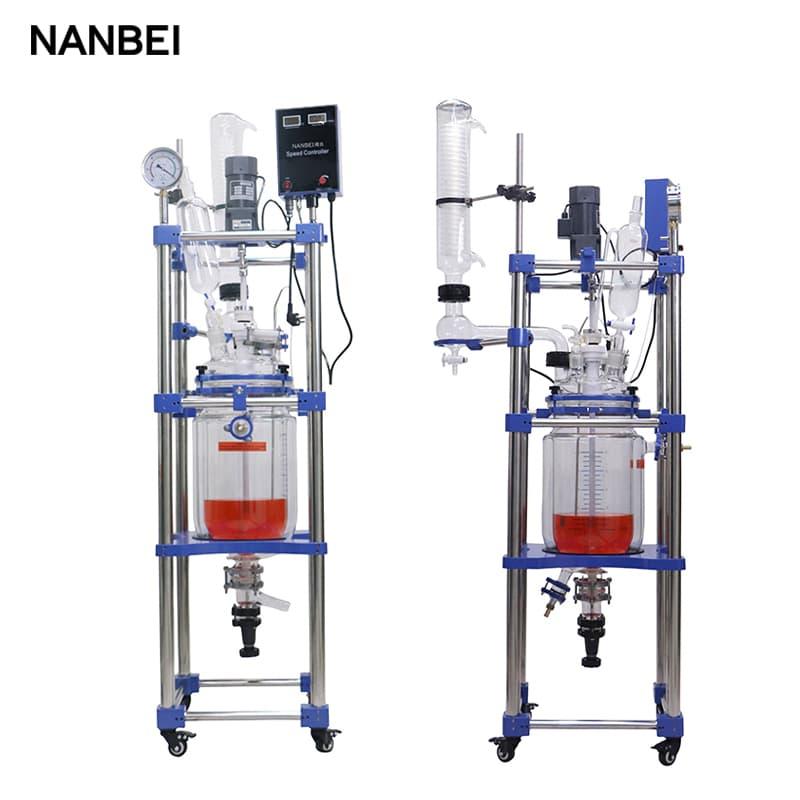
Regular testing of the transmission, agitator, and shell not only protects your investment but ensures the safety of your lab personnel. A well-maintained automatic glass reactor provides stable data for scientific research and consistent yields for production.
Looking for a durable, high-performance solution?
View our [Double-walled Glass Reactors] for precise temperature control.
Explore our [Single-walled Glass Reactors] for versatile mixing applications.