
Technical Articles
NANBEI Is Professional On Providing One-step Solution Of Laboratory Instruments And Equipment
A conductivity meter is a commonly used analytical instrument for measuring the ability of a solution to conduct electricity. It plays an important role in water quality analysis, environmental monitoring, food processing, pharmaceuticals, and laboratory research.
To ensure the accuracy and reliability of conductivity measurements, the following practices are essential:
Use standard conductivity solutions to calibrate the instrument regularly.
Calibration should be performed before important measurements or after long periods of non-use.
Multi-point calibration can improve accuracy across a wide measurement range.
Rinse electrodes with distilled or deionized water after each use.
Avoid wiping electrodes with tissue paper, as it may damage the sensitive surface.
Store electrodes in appropriate storage solutions to maintain stability.
Conductivity is highly affected by temperature changes.
Use meters with automatic temperature compensation (ATC) for more accurate results.
When using manual compensation, record the solution temperature to correct readings.
Ensure the sample container is clean and free from contamination.
Immerse the electrode completely in the sample without touching the container walls.
Avoid bubbles or residues sticking to the electrode, as they may affect readings.

Check cables, connectors, and electrode conditions regularly.
Replace aging electrodes in time, as their response decreases over long-term use.
Verify accuracy with reference solutions periodically.
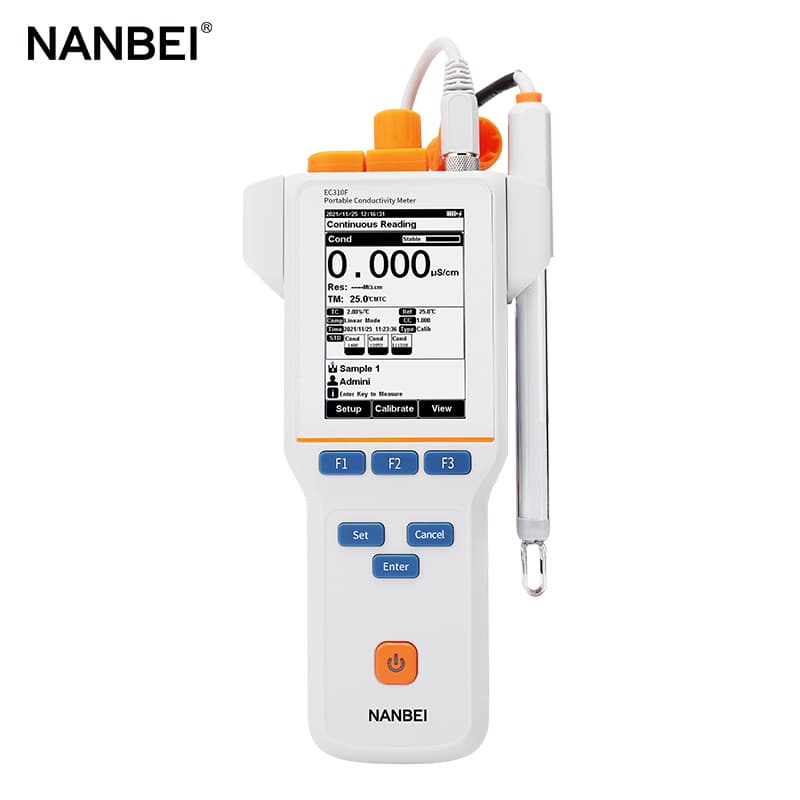
To ensure the accuracy of a EC310F Portable Conductivity Meter, users should focus on regular calibration, proper electrode care, temperature compensation, and standardized measurement procedures. With correct maintenance and operation, the conductivity meter will deliver precise and reliable results in both laboratory and industrial applications.