
Technical Articles
NANBEI Is Professional On Providing One-step Solution Of Laboratory Instruments And Equipment
Optimized Storage Guide for Jacketed Glass Reactors: 7 Critical Factors
Ensure Safety & Extend Equipment Lifespan
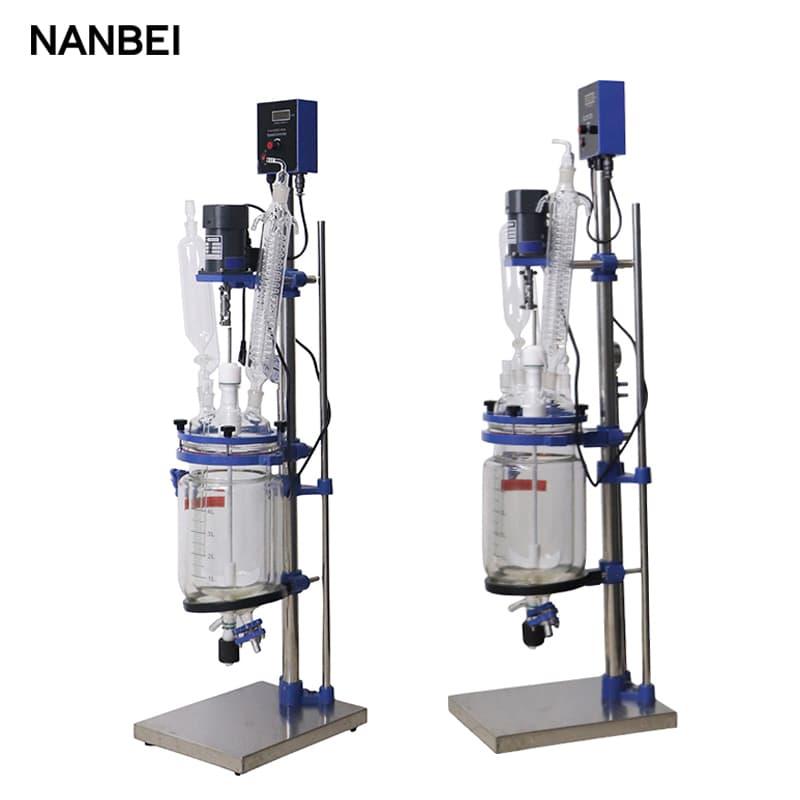
Jacketed glass reactors enable precise temperature control for distillation, synthesis, and crystallization processes. However, their borosilicate glass construction
(CTE: 3.3×10⁻⁶/K) and tall profiles (typically 1.5-2m height) demand specialized storage conditions to prevent mechanical failure and ensure operational safety.
1. Floor Stability Requirements
Flatness Standard: ≤3° slope (verify with laser level)
Load Capacity: ≥1.5× total equipment weight (up to 500kg when fully loaded)
Vibration Control:
Install in areas with <4Hz vibration frequency
Maintain ≥3m distance from shakers or centrifuges
Industry Data: 15% of reactor fractures originate from floor vibration
2. Ventilation System Design
System Type Best For Min. Airflow
Overhead Canopy Hood Routine operations 0.5 m/s
Floor Ventilation Volatile/toxic materials 1.2 m/s
Room-Negative HF/corrosive processes 15 ACH
Critical: Maintain 30-50cm clearance between reactor top and hood (Ventilation Efficiency Calculator)
3. Safety Zone Configuration
Clearance Standards:
Front: ≥1m (emergency access)
Sides: ≥0.8m (maintenance space)
Emergency Equipment:
Eyewash/showers within 10-second reach
Spill trays with ≥110% reactor volume capacity
4. Environmental Controls
Temperature: 15-25°C (prevents thermal stress cracks)
Humidity: 30-60% RH (reduces frame corrosion)
Light Management:
UV-filtered windows (borosilicate light degradation threshold: 300kLux·hr/yr)
5. Securing Systems
markdown
- **Primary**: Locking casters (≥200N braking force)
- **Secondary**:
- Stainless steel anchor bolts (M12 specification)
- Anti-vibration bases (damping coefficient >0.65)
- **Testing**: Monthly brake effectiveness checks
6. Hazard Zone Isolation
Separation Distances:
≥2m from acid storage cabinets
≥1.5m from high-heat equipment
Protective Barriers:
Polycarbonate shields (≥8mm thickness)
Pressure-relief direction toward unoccupied areas
7. Utility Pre-Configuration
Essential Connections:
Coolant valves (DN15 interface)
Vacuum/pressure lines (φ10mm quick-connect)
Emergency stop button within 3m
Monitoring Systems:
Area humidity/temperature sensors
Vibration alarms (threshold ≥0.5g)
Compliance & Maintenance Protocols
Monthly Verification:
Frame level calibration (tolerance ≤±0.5°)
Seal integrity testing
Airflow validation
Annual Safety Audit:
Glass stress analysis (polarized light scanning)
Structural corrosion assessment (Ultrasonic Testing Service)
Pro Tip: Install polycarbonate barriers when storing multiple reactors - reduces cross-contamination risks by 70% during simultaneous operations. Always verify floor load ratings with building engineers before installation.