
Technical Articles
NANBEI Is Professional On Providing One-step Solution Of Laboratory Instruments And Equipment
Rotary evaporators (rotovaps) are indispensable in pharmaceutical, chemical, and biotechnology laboratories for solvent recovery, purification, and concentration processes. Their efficiency depends on precise configuration of 5 core systems:
1. Heating Bath Systems
Medium Selection Guide:
Water bath (0-95°C): Standard for aqueous solutions
Silicone oil bath (up to 180°C): High-temperature applications
Glycol baths (-40°C to 150°C): Thermal cycling requirements
Temperature Control: Modern systems feature digital PID controllers maintaining ±0.2°C accuracy with automatic over-temperature protection. For thermal-sensitive compounds, consider jacketed cooling systems.
2. Condenser Configurations
| Condenser Type | Application | Efficiency |
|---|---|---|
| Straight-cooled | Common solvents (water/ethanol) | ★★★☆☆ |
| Recirculating chillers | Low-boiling solvents (ether) | ★★★★☆ |
| Dry ice condensers | Cryogenic recovery (-78°C) | ★★★★★ |
Pro Tip: Ethanol-dry ice baths increase condensation efficiency by 40% for volatile solvents. Always use cold traps when processing >500ml solvents to prevent pump contamination.
3. Vacuum Systems
Water aspirators: 15-20 mbar (cost-effective)
Oil-free diaphragm pumps: 0.1-5 mbar (high-boiling solvents)
Vacuum controllers: Maintain precise pressure gradients
Critical: Always perform vacuum integrity checks before operation. For sensitive compounds, consider adding a vacuum gauge with 0.1 mbar resolution.
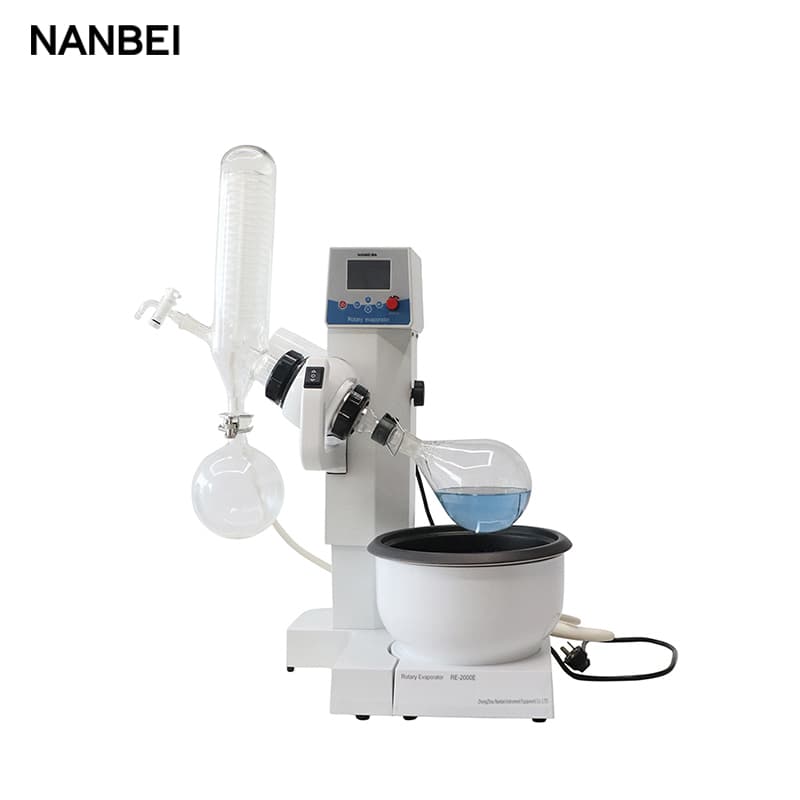
4. Rotation & Sealing Systems
Stepless speed regulation: 20-280 RPM range
Advanced sealing:
• PTFE/Kel-F chemical-resistant seals
• Double-seal designs for high-vacuum operations
Bump prevention: Automatic flask lifting mechanisms
5. Smart Control Units
Modern configurations feature:
• Programmable temperature/pressure protocols
• Solvent recovery rate tracking
• Automatic emergency shutdown
• Cloud-based data logging for GMP compliance
Operational Best Practices
Safety Protocol:
Perform vacuum seal verification
Gradual pressure reduction (prevents bumping)
Never heat >80°C solvents in oil baths
Use protective shields for hazardous materials
Maintenance Schedule:
Weekly: Clean glass joints with acetone
Monthly: Replace PTFE seals and inspect hoses
Quarterly: Calibrate vacuum gauges and sensors
Industry Applications
• Pharmaceutical: API crystallization control (±0.5°C precision)
• Food Technology: Low-temperature essential oil concentration
• Nanomaterials: Automated solvent exchange systems
• Environmental: Sample concentration for analysis
Technical Support Tip: For high-boiling point solvents (>150°C), combine oil baths with high-vacuum oil pumps (0.01 mbar range). Always verify chemical compatibility of seals when working with aggressive solvents like DMF or THF.